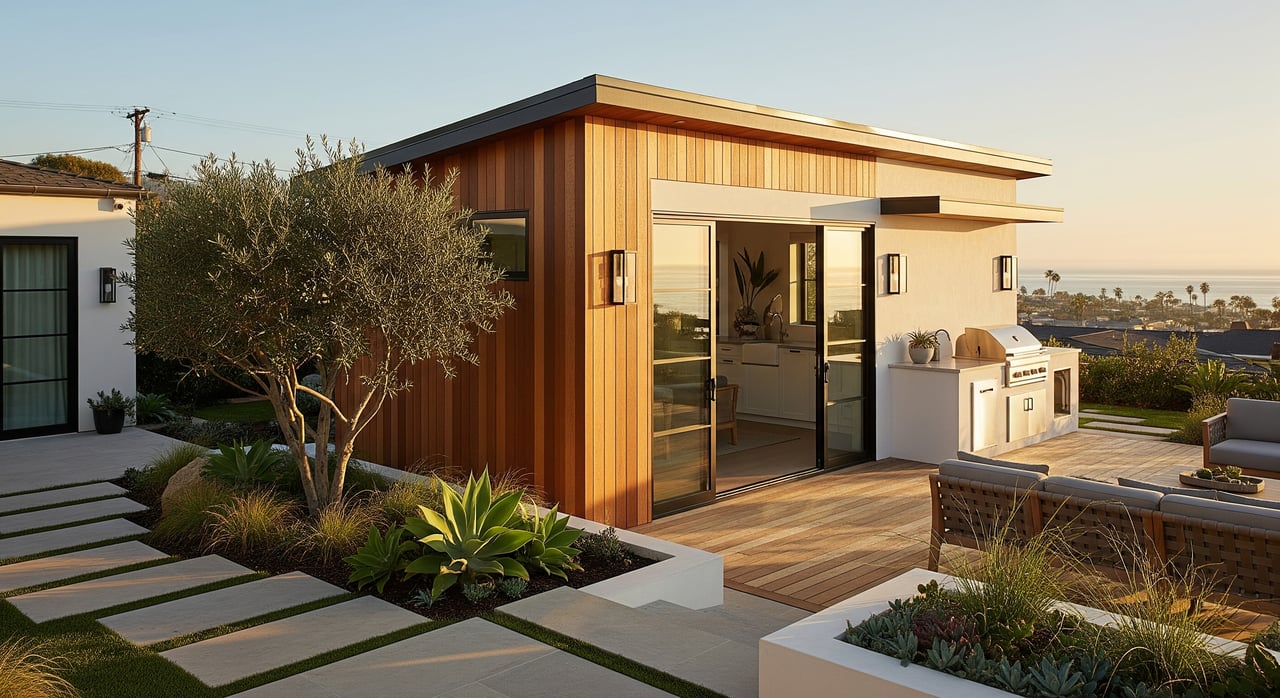
Thinking about adding an ADU to your Encinitas property in 92024? Done right, an accessory dwelling can create steady income, add flexibility for family or guests, and strengthen resale value. The key is understanding the rules, real costs, and a simple ROI model before you start. This guide walks you through Encinitas ADU rules, timelines, cost ranges, rent assumptions, ROI math, coastal-zone cautions, and next steps with official resources. Let’s dive in.
Encinitas ADU rules at a glance
California law makes ADUs easier to approve and build. State statutes in Government Code §65852.2 and §65852.22 set the baseline for what is allowed. Cities, including Encinitas, can add objective standards like height, setbacks, and design, but they must stay within state rules.
Encinitas uses a ministerial approval process for compliant ADUs, which typically shortens review compared to discretionary permits. You can usually build detached or attached ADUs, convert garages or existing space, and create JADUs within the main home. Local standards, size maximums, and design rules vary by parcel.
Always confirm parcel-specific requirements with the City of Encinitas Planning and Building Departments. Start with the City of Encinitas website for current handouts, fee schedules, and contacts. For statewide guidance, review the California HCD’s ADU guidance and FAQs.
What to confirm before you budget
- Zoning, ADU type and count allowed, and whether the property lies in the Coastal Zone
- Exact setbacks, height, and lot coverage or FAR standards for your parcel
- Parking requirements and any exemptions that apply
- Utility availability and estimated connection fees
- Permit timeline and expected city fees, including any coastal-related permits
- Design review triggers tied to neighborhood overlays
ADU types and timelines in 92024
Common Encinitas ADU paths include:
- Detached ADU in the yard
- Attached ADU as an addition to the main home
- Garage or accessory structure conversion
- JADU within the primary dwelling, usually 500 sq ft or less
Typical timeline ranges:
- Pre-design and site feasibility: 2 to 4 weeks
- Architecture, design, and engineering: 4 to 12 weeks
- City permits and plan check: 4 to 12 weeks for ministerial ADUs, longer if coastal reviews apply
- Construction: 2 to 4 months for small conversions; 4 to 9+ months for detached builds
From feasibility to occupancy, plan for about 6 to 12+ months. Coastal parcels or complex sites may take longer.
What ADUs cost in Encinitas
Final costs depend on size, site work, utilities, finish level, and whether your property is in the Coastal Zone. Use these ranges for early budgeting, then collect multiple local bids:
- Garage or interior conversion, including JADUs: roughly $40,000 to $150,000
- Attached or modest detached ADU, about 300 to 600 sq ft: roughly $150,000 to $350,000
- Larger detached ADU, about 600 to 1,000+ sq ft: roughly $250,000 to $600,000+
Primary cost drivers:
- ADU type and square footage
- Site work such as grading, drainage, and access
- Sewer, water, and electrical hookups or capacity upgrades
- Foundation type and required engineering
- Coastal proximity and related code requirements
- Finish level from rental-grade to high-end coastal
- Labor and material pricing in the San Diego market
- City fees, impact fees where applicable, and any coastal or mitigation fees
Do not forget startup and operating items: insurance adjustments, builder’s risk coverage during construction, metering choices, and marketing or furnishings if you plan to rent furnished.
Setting realistic rent and use
Rents in 92024 vary by size, condition, and proximity to beaches and amenities. A small studio or JADU, or a compact 1-bedroom, often achieves rent in the low-to-mid thousands per month in coastal San Diego neighborhoods. Larger or higher-end detached units typically command more. Use active local comps and keep assumptions conservative.
How to set rent assumptions:
- Pull current comps for 92024 units similar in size and finish
- Adjust for furnished vs. unfurnished and whether utilities are included
- Apply a vacancy factor even in strong markets to stay conservative
If you are considering short-term rentals, verify Encinitas rules first, since many coastal cities restrict STRs or require permits. When in doubt, confirm with city staff.
ROI framework you can trust
Use a simple, conservative framework to model returns before you commit to plans.
- Project costs
- Hard costs for construction
- Soft costs for design, engineering, permits
- Contingency of 10 to 20 percent
- Financing costs, if any
- Annual gross rental income
- Monthly rent times 12
- Subtract a vacancy factor, commonly 5 to 10 percent for long-term rentals
- Operating expenses
- Insurance allocation, maintenance and repairs
- Property management, typically 8 to 12 percent if you do not self-manage
- Utilities if owner-paid and reserves for capital items
- Net Operating Income (NOI)
- NOI equals gross income minus vacancy and expenses
- Simple ROI metrics
- Unlevered cap rate equals NOI divided by total project cost
- Cash-on-cash return equals annual cash flow after debt service divided by equity invested
- Payback period equals project cost divided by annual pre-tax cash flow
Example conservative scenario:
- Total project cost: $300,000
- Rent: $2,500 per month equals $30,000 per year
- Vacancy at 7 percent reduces effective rent to $27,900
- Operating expenses at 35 percent of effective rent equals $9,765
- NOI equals $27,900 minus $9,765 equals $18,135
Under this example, the unlevered cap rate is about 6.0 percent. With financing, early cash-on-cash returns are often lower, then improve as rents grow and debt amortizes. Local numbers can change the outcome significantly, so update the model with current comps and actual bids.
What moves ROI up or down
- Higher rents from strong demand or premium finishes
- Lower build costs or converting existing space instead of new construction
- Lower operating costs if you self-manage
- Favorable financing terms
- Tax effects such as depreciation and interest deductibility
For property taxes after you add an ADU, contact the San Diego County Assessor to understand reassessment rules. Many owners see an assessed-value increase that reflects the new unit’s contribution.
Resale impact in Encinitas
Appraisers and buyers often look at both income potential and comparable sales. If an ADU generates $18,000 in NOI and the market cap rate is 5 percent, a simple income approach suggests a value add of about $360,000. Actual premiums vary by neighborhood, buyer pool, quality, and legal status.
Positive resale drivers:
- Legal, well-integrated, and well-permitted ADUs
- Flexible use for income, guests, or multigenerational living
- Documentation of permits, utility connections, and inspections
Risks to manage:
- Unpermitted or nonconforming work can stall a sale
- Overbuilding beyond neighborhood norms can reduce appeal
- Short-term rental use can be a negative to some buyers if restrictions apply
Practical next steps in 92024
Use this checklist to turn your concept into a confident plan:
- Verify zoning and whether your parcel is in the Coastal Zone with City of Encinitas Planning.
- Request a pre-application or pre-check to confirm parcel-specific standards and fees.
- Collect 2 to 3 itemized bids from licensed contractors and your design team.
- Pull current rent comps and decide on long-term versus short-term strategy based on local rules.
- Call the County Assessor to review potential reassessment and tax impacts.
- Build a conservative pro forma with costs, rents, vacancy, expenses, financing, and tax effects.
- If resale is a goal, speak with an appraiser and your agent about recent sales with ADUs and likely buyer segments.
- Confirm financing options and how lenders will underwrite ADU income.
For statewide policy context and FAQs, review HCD’s ADU guidance along with the governing statutes in Gov. Code §65852.2 and §65852.22.
Common pitfalls to avoid
- Starting design without confirming parcel-specific standards
- Underestimating site and utility work
- Skipping contingency in the budget
- Proceeding without clear permit documentation and final inspections
- Assuming short-term rentals are allowed without verification
Get local guidance for your ADU strategy
An ADU can be a smart move in 92024 when the plan, budget, and timeline are aligned. If you want data-backed rent assumptions, introductions to local designers and contractors, or a resale strategy tied to your long-term goals, reach out. You will get a calm, no-pressure consultation and clear next steps tailored to your parcel and objectives.
Connect with Peter Antinucci to evaluate your ADU options or to discuss buying or selling a property with income potential.
FAQs
What are the basic ADU rules in Encinitas 92024?
- California’s ADU laws require ministerial approval for compliant ADUs, allow detached, attached, conversion units, and JADUs, and limit local barriers. Encinitas applies objective standards. Confirm parcel details with the city and review Gov. Code §65852.2 and §65852.22.
How long does it take to build an ADU in Encinitas?
- A typical timeline is 6 to 12+ months from feasibility to occupancy, including several weeks for design and city review and 2 to 9+ months for construction, with coastal parcels sometimes taking longer.
How much does an Encinitas ADU cost to build?
- Rough ranges: $40,000 to $150,000 for conversions or JADUs, $150,000 to $350,000 for modest attached or detached builds, and $250,000 to $600,000+ for larger detached ADUs, depending on site work, utilities, and finishes.
How should I estimate rent for an ADU in 92024?
- Use current local comps for similar size and finish, adjust for utilities and furnishings, and apply a vacancy factor. Coastal 92024 units often achieve low-to-mid thousands for small formats, but verify with active listings.
Will adding an ADU raise my San Diego County property taxes?
- New construction commonly increases assessed value. Contact the San Diego County Assessor to understand how an ADU may be assessed and how that affects your tax bill.
Do I need to provide parking for an ADU in Encinitas?
- State law limits when cities can require parking, such as near transit or for certain conversions. Encinitas may apply parking rules where allowed. Confirm your parcel’s requirements with city planning.
Are short-term rentals allowed for Encinitas ADUs?
- Many coastal cities restrict or regulate STRs. Before assuming STR income, verify Encinitas rules with city staff and plan your pro forma using conservative assumptions.